Your Morning Foundation: A Simple 20-Minute Reset for Body and Nervous System
In the spirit of talking about foundations this month in my yoga and movement classes, I wanted to start with something practical:
How you set up the foundation of your day.
I know. There are approximately 47,000 articles about morning routines:
Wake up at 4:00 AM.
Take a cold shower.
Journal three pages.
Do a 45-minute yoga flow.
Make a gratitude list.
Meditate.
Visualize your future.
Drink lemon water while standing on one leg facing east. (I meannnn… if we’re not hydrating while spiritually triangulating with the sunrise, are we even optimizing?)
It’s enough to make your eyes cross.
And if you’re anything like most normal working humans, it’s also enough to make you say, “never mind,” and roll back over for an extra 15 minutes of snooze time.
So instead of building an Olympic-style morning ritual, let’s break this down to the most essential components of a solid foundation.
Not fancy. Just functional.
Why Foundation Matters (Before 9 AM)
When your muscular foundation isn’t working properly right off the bat, you struggle all day, whether that looks like suffering through nagging pain or battling stiffness.
If certain muscles are asleep at the wheel, other smaller muscles compensate and joints become stressed. If your glutes aren’t firing, your lower back picks up the slack. If your hip flexors are underperforming, simply going up stairs puts the hurt on your knees.
Now let’s talk about your nervous system.
If you wake up and immediately check email, scroll headlines, watch cute cat FB reels, think about your to-do list, or replay yesterday’s stress… your nervous system is already activated before your feet hit the ground.
And here’s the important part:
You cannot out-think your body.
No amount of positive thinking, affirmations, journaling, or “I should calm down” will override a nervous system that feels threatened or overloaded.
Your body is primitive. It is the first responder to stress. And it always wins.
So instead of trying to manage your day with willpower, what if you stabilized your foundation first?
A 20-Minute Morning Foundation
I invite you to give yourself 20 minutes.
That’s about the time your average coffee pot takes to do its thing.
And what I love about what I’m about to show you is that it performs double duty:
It supports both your muscular foundation and your parasympathetic nervous system (your “rest and regulate” system).
Two simple steps.
Step 1: Wake Up Your Muscular System
These movements are gentle but strategic. They activate key muscles that support your spine, hips, core, and overall structure.
**You will want to do each movement 6 times, holding for 6 seconds each time, for maximum effect.
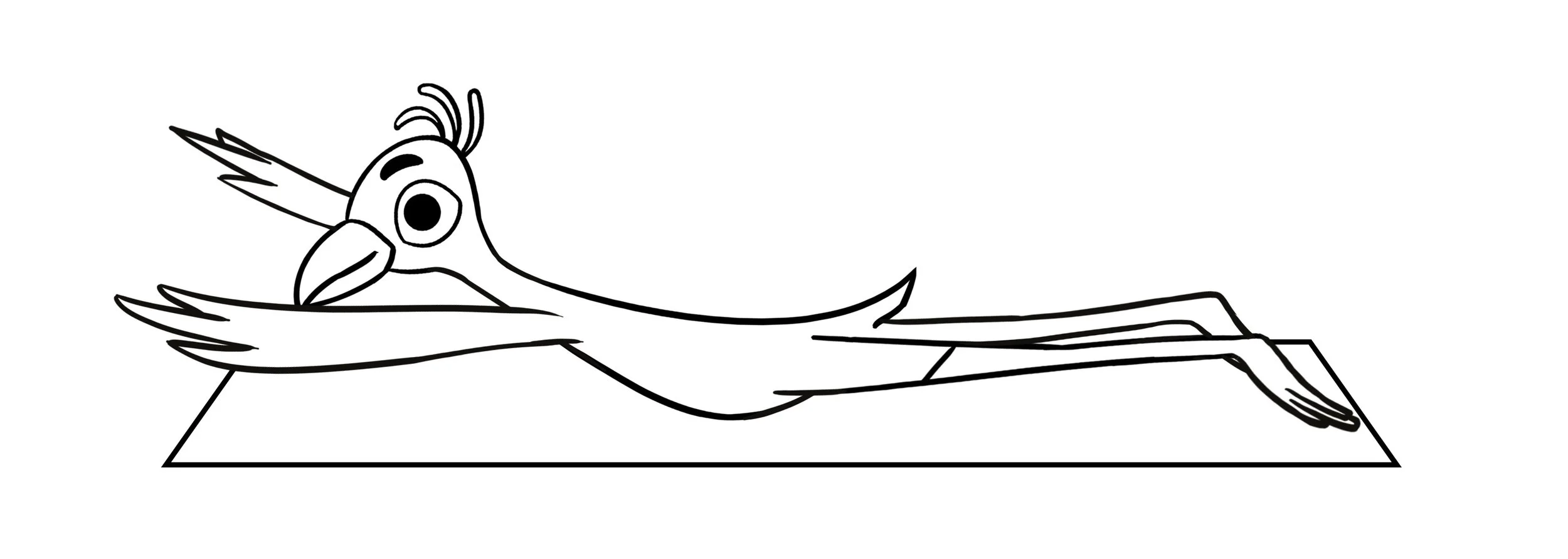
1. Shalabhasana (Locust Pose) – Arms Forward
This strengthens the posterior chain, especially glutes and back body, which many of us underuse from sitting. Make sure to hold your beachball in front of you, thumbs up to the ceiling.
It also performs double duty. One of the major pathways of the vagus nerve runs through the abdominal region, and gentle prone activation can stimulate that pathway in a subtle, regulating way.
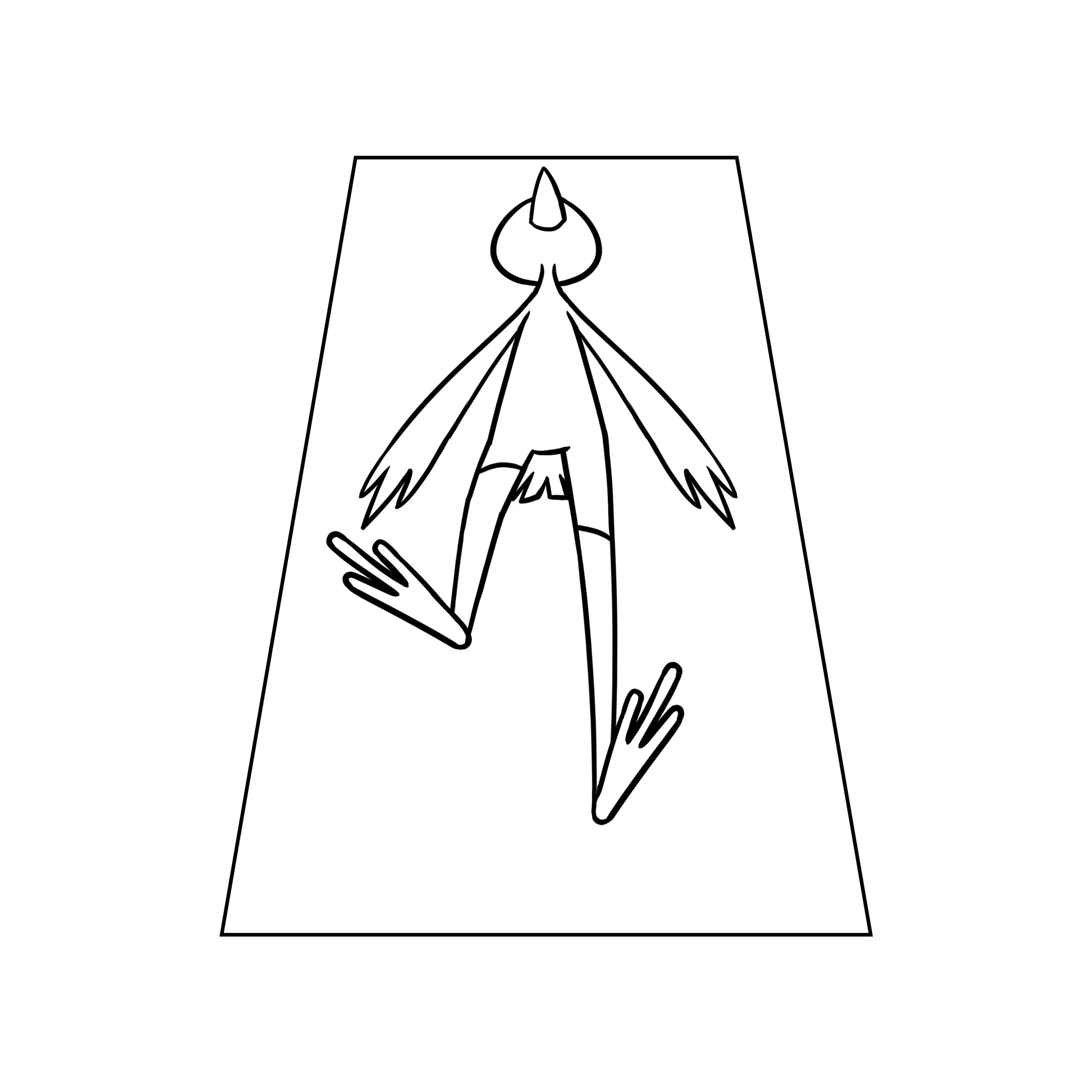
2. Leg Lifts
Targeted hip flexor and lower abdominal engagement supports pelvic stability and reduces compensatory strain. Toes pointed directly up, straight leg hovers about 2 feet off the ground.
3. Reclined Figure 4 (with a slight alteration)
Strengthens the psoas muscle by pressing the knee into the opposite palm of the hand – very different from passive stretching, reclined pigeon pose, that is often taught in conventional yoga. If you’ve attend any of my classes, you know this activation is a frequent flyer.

4. Knee Presses
Simple but powerful. Pressing the knees into resistance wakes up the hip flexors and core.
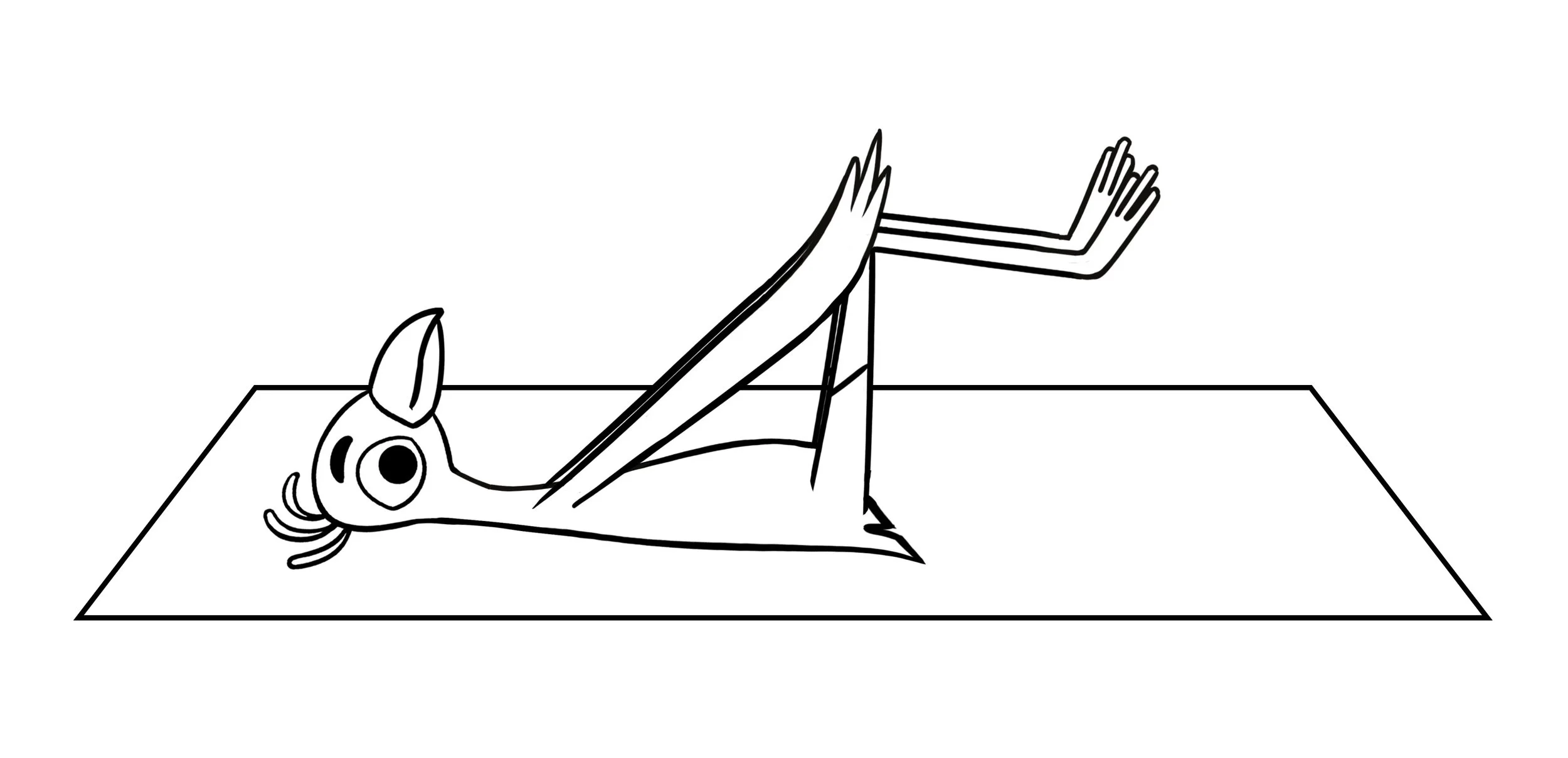
5. Glute Activation
Because if your glutes aren’t doing their job, something else will. Usually your lower back. And it won’t be happy about it. Lift your knee off the mat, maybe about half an inch. Less is more. If you try to muscle-through it, your lower back will start to compensate.
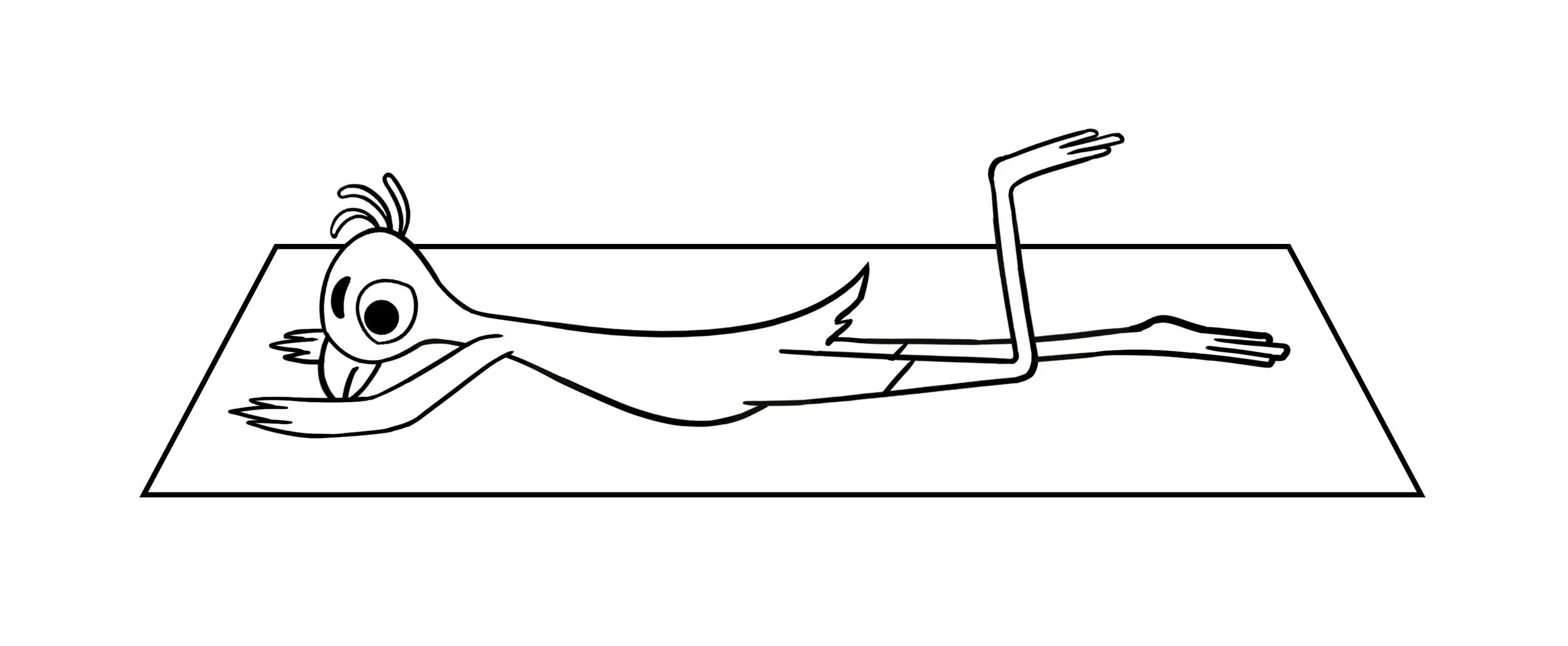
6. Twists
This gets your obliques working so that when you reach to grab your sweater in the back seat of your car, you don’t struggle with arm or neck pain for days later. Make sure to keep your hips square and facing front - hence the block in-between the legs.

The goal here is not to get in a morning workout.
It’s to remind your body how to support you.
Here’s a YouTube video that demonstrates each movement.
Step 2: Reset Your Nervous System
Set a timer for 5 minutes.
Inhale through your nose.
Exhale with a hum.
You can hum, make an “Ahhh” sound, or chant OM.
The vibration matters more than the word.
Sound vibration stimulates the vagus nerve, which plays a key role in calming your nervous system. It signals safety. It slows the heart rate. It shifts you toward parasympathetic regulation.
It also clears mental fog in a way that thinking harder never will.
Five minutes. That’s it.
You don’t need a mountain retreat. You need consistency.
The Real Point
This isn’t about becoming a “morning person.”
It’s about creating stability before the world starts pulling at you.
When your muscular foundation is active and your nervous system is regulated:
You move through your day with more steadiness.
You react less impulsively.
You experience less physical strain.
You feel clearer.
Storms still happen.
Emails still come.
People still have opinions.
Life still happens.
But you’re not starting from wobble.
You’re starting from foundation.
If you’re feeling chronically off, in pain, anxious, or like you’re constantly managing stress instead of living your life, sometimes it’s not about trying harder.
It’s about rebuilding what’s underneath.
That’s what I focus on in my movement classes and in my Personal Operating Manual sessions - helping people stabilize physically and internally so they’re not struggling through their days.
Start small. Be consistent.
Your future self will thank you.